
Why you should consider Portugal for its private health care system - compared to the U.S.
Portugal’s private health system is generally much cheaper and more predictable than the American private system, especially for people with chronic diseases. In the U.S., private insurance can still leave patients facing large premiums, deductibles, and out-of-pocket bills, while in Portugal private care is usually used as a supplement to a lower-cost public system, keeping total costs far lower overall.
System structure
Portugal has a dual model: a public National Health Service for residents and a private sector that offers faster access, shorter waits, and more choice. Private insurance in Portugal is usually optional and comparatively affordable, while in the U.S. private insurance is the main gateway to care for most people and is often tied to employers or bought individually.
The result is a very different financial experience. In Portugal, private care may be used for convenience; in the U.S., private coverage is often essential for avoiding catastrophic bills.
Typical private-care costs
Private consultations in Portugal are relatively modest by international standards. Examples in the sources include about €50 for a general practitioner visit, about €90 for a specialist, and private insurance starting around €30 per month for a young person, rising to about €300 per month for a couple in their 60s with stronger coverage.
By contrast, U.S. private care is much more expensive. A U.S. private hospital stay can start around $3,000 per day and rise to $15,000 or more, while even a routine doctor visit can be far more expensive than in Portugal.
Chronic disease costs
Chronic disease is where the contrast becomes most visible. In Portugal, insurers often exclude pre-existing conditions or apply waiting periods, but public care can heavily subsidize ongoing treatment and medication; one source notes that chronic-condition medications are often subsidized anywhere from 10% to 90%, and can be free in serious cases.
In the U.S., chronic disease care can generate high annual expenses even for insured patients. The American Diabetes Association notes that extra costs for an insured person with diabetes can exceed $4,800 per year, and a more recent KFF report shows one patient paying $125 monthly for insulin plus $150 per endocrinology visit and $111 for labs before each visit. A peer-reviewed study also found substantial out-of-pocket burden for U.S. patients with diabetes, with out-of-pocket costs in the thousands per year and much higher total costs of care.
What this means in practice
For a healthy person, Portuguese private care often means paying a manageable monthly premium and modest visit fees for quick access. For someone with a chronic disease, Portugal’s public system can absorb much of the long-term burden, while private insurance may not fully cover pre-existing conditions unless the policy is structured for that.
In the U.S., chronic illness often remains expensive even with insurance because costs are split across premiums, deductibles, copays, drugs, and specialist visits. That makes the American private system more flexible in access but far less predictable financially.
Conclusion
The Portuguese private health system is cheaper, simpler, and less financially risky than the American private system, especially for chronic disease management. The U.S. system can offer broader coverage options and more high-tech specialization, but it does so at much higher cost and with far greater exposure to out-of-pocket spending.
At Tellefsen Consulting we support expats who are considering to make the move to Portugal including insurance and health insurance brokerage. For more information please contact us at contact@tellefsen-consulting.com
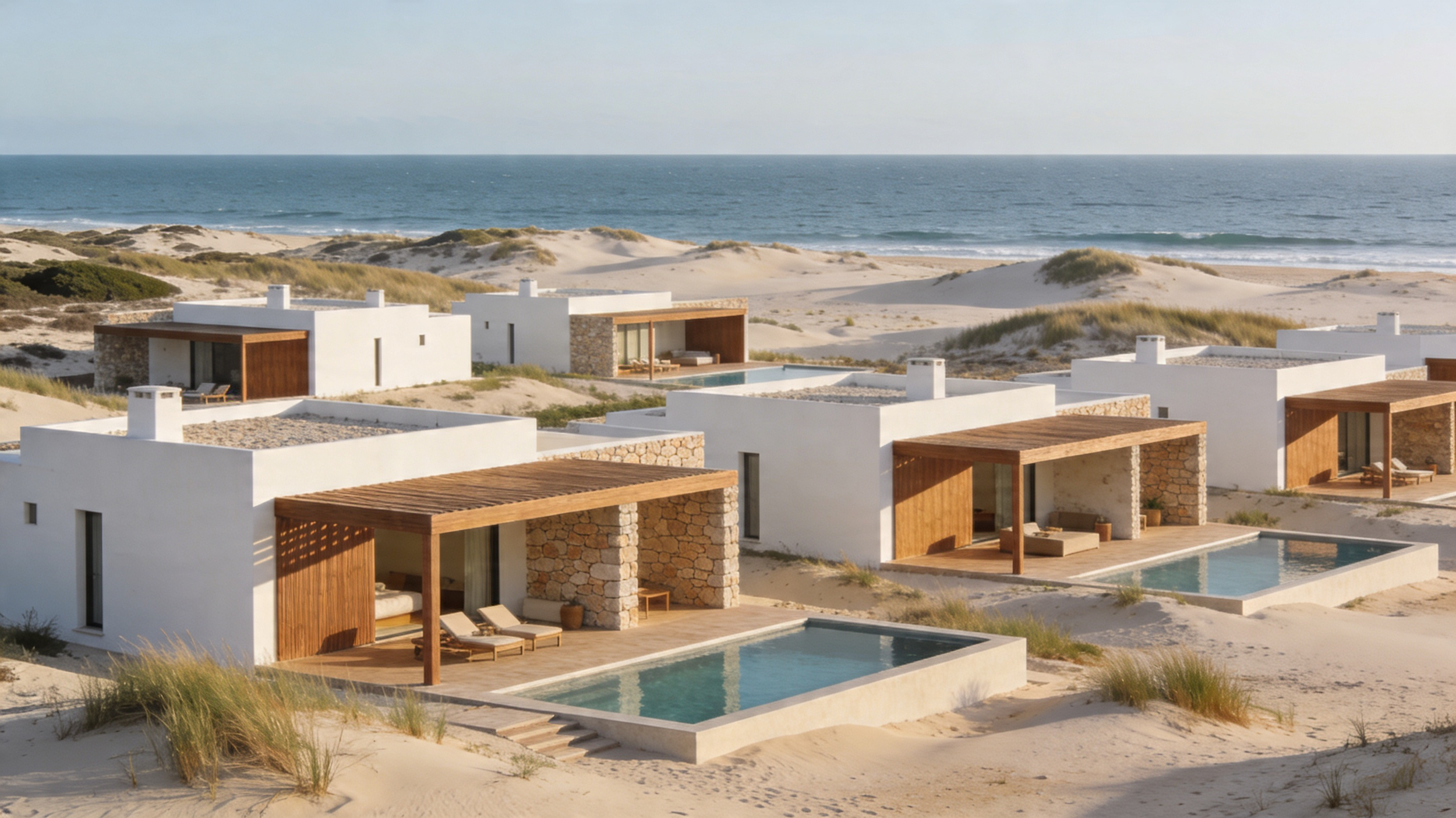
The booming Portuguese construction industry is looking for sustainable solutions.
Portugal’s construction industry offers a compelling entry point for foreign companies, especially those with expertise in sustainable building, digital construction, or energy-efficient materials. The market is being shaped by housing demand, urban renovation, infrastructure investment, and stricter sustainability expectations, creating space for new entrants that can bring efficiency, innovation, and compliance-ready solutions. With a boom in especially the luxury segment, North European suppliers of energy efficient solutions and sustainable materials are in high demand.
By Maj Tellefsen, maj@tellefsen-consulting.com
Market entry opportunities
For new entrants, the strongest opportunities are likely in three areas.
• Residential development and refurbishment, where there is persistent demand for better-quality, energy-efficient homes, especially in the high-end segment.
• Commercial and hospitality projects, where owners want lower operating costs and stronger sustainability positioning in tourism.
• Infrastructure and industrial projects, where efficiency, schedule certainty, and sustainability credentials are increasingly important, however the Portuguese market are facing certain downward levels of quality assurance and timeline obligations.
Companies that can offer measurable outcomes, such as reduced energy use, lower lifecycle costs, or faster delivery times, will have a stronger case than those selling sustainability as a branding exercise alone.
What buyers are looking for
Portuguese developers, contractors, and investors are increasingly interested in solutions that help them deliver projects faster and with fewer risks, and which speaks to a luxury segment on the rise. That includes prefabricated systems, BIM-enabled coordination, energy-efficient materials, and products that simplify permitting or improve building performance. Cost sensitivity remains important, so suppliers need to demonstrate both environmental and commercial value.
Partnerships also matter. Foreign companies often enter more successfully through local distributors, joint ventures, or pilot projects with Portuguese developers and engineering firms. That approach helps with regulatory navigation, market credibility, and relationship-building in a market where trust and execution carry significant weight.
Why Portugal is interesting
Portugal’s construction industry is becoming an increasingly attractive market for international companies, particularly those offering sustainable and efficient solutions. Driven by housing demand, urban regeneration, infrastructure investment, and stricter environmental expectations, the sector is opening up to suppliers and service providers that can help deliver better buildings with lower environmental impact.
For companies considering market entry, Portugal offers a useful balance of opportunity and accessibility. Demand is strong in residential refurbishment, new housing, hospitality, and infrastructure, while the sustainability agenda is creating space for innovation in prefabrication, low-carbon materials, digital construction, and energy-efficient design. In a market where cost control and delivery speed remain critical, solutions that improve productivity and reduce waste can stand out quickly.
The key to entering Portugal successfully is to position sustainability as a commercial advantage. Developers and investors are not only looking for greener outcomes; they are looking for solutions that improve project economics, reduce operational costs, and support regulatory compliance. Companies that can demonstrate those benefits, and that are willing to build local partnerships, are well placed to gain traction in the Portuguese market.
As an experienced consultant in the Portuguese market, I am currently on the look-out for 3-7 companies that can compliment each other within the industry to form a joint alliance to enter into the Portuguese market. If you are interested in hearing more, please get in touch at maj@tellefsen-consulting.com

What to consider for your new life in Portugal
Moving to Portugal as a Scandinavian or other EU citizen is straightforward thanks to free movement rights, but smart planning ensures a smooth transition to this sunny, affordable lifestyle.
Moving to Portugal as a Scandinavian or other EU citizen is straightforward thanks to free movement rights, but smart planning ensures a smooth transition to this sunny, affordable lifestyle.
Residency basics for EU citizens
As an EU/EEA national from Denmark, Sweden, Norway, or similar, you can enter Portugal visa-free and stay for 90 days in any 180-day period. After 3 months, register for a Certificate of Registration (CRUE/CAE) at your local town hall (Câmara Municipal) with proof of employment, self-employment, studies, or sufficient funds. This grants indefinite stay rights and access to public services like healthcare. After five years you can apply for permanent residence.
Essential first steps
Start by getting a NIF (Número de Identificação Fiscal) tax number online or at a tax office—it’s key for banking, rentals, contracts, and utilities. Open a Portuguese bank account (e.g., at Millennium BCP or Novo Banco or even on Revolut who offers Portuguese IBANs now), then enroll in the SNS public system via your local health center. Scout housing in expat-friendly areas like Lisbon’s suburbs, Cascais, or the Algarve; aim for rentals via Idealista.pt. Be aware of pitfalls!
Practical setup: taxes, healthcare, daily life
Taxes kick in after 183 days as a resident; leverage double-tax treaties to avoid double hits on pensions or remote income—Check with your national tax services to be sure about the rules. SNS healthcare is public in Portugal. It is of a different standard that we are used to in Scandinavia and can take time. However low-cost once registered; supplement with private options for speed. Expect 30-50% lower costs than Scandinavia for housing/food, with excellent public transport, English widely spoken in cities, and Nordic-friendly climate perks like mild winters.
Get in touch with me for your big move
At Tellefsen Consulting, we specialize in guiding Scandinavian expats and investors from Denmark and beyond into Portugal’s opportunities, bridging cultural and bureaucratic gaps with hands-on support. From securing your NIF, ideal housing in vetted neighborhoods, and real estate navigation, our tailored services ensure you hit the ground thriving—not just surviving. We can also help you with contact to lawyers, insurance brokers and mortgage brokers. Get in touch today to fast-track your move and unlock Portugal’s potential with a trusted local partner.

The Portuguese housing market at a glance.
Portugal’s construction market in early 2026 combines solid medium‑term growth with clear structural needs in housing and infrastructure, creating an attractive entry point for long‑term Scandinavian capital.
Market size and growth outlook
Portugal’s construction market was valued at around 11.6 billion euros in 2022 and sector revenues surpassed 34 billion euros in 2023, reflecting strong activity across residential, commercial, and infrastructure segments. Independent industry forecasts project average real growth of about 1.7% per year between 2026 and 2029, supported by public investment and EU‑backed programs. This places Portugal in a moderate‑growth but relatively stable trajectory compared to more volatile European markets.
Demand drivers: housing and infrastructure
Portugal faces a substantial housing shortage, particularly in Lisbon, Porto and coastal urban areas, with government officials highlighting the need for a large number of new homes beyond the public sector’s planned 130,000 units. Residential demand is underpinned by population concentration in metropolitan areas, continued foreign buyer interest, and pressure in the rental market, where affordability constraints remain acute. At the same time, the state is advancing major infrastructure projects, including a new Lisbon airport, high‑speed rail, and large hospital and public facility upgrades, opening space for private developers, contractors and co‑investment structures.
Policy environment and costs
The policy framework is increasingly geared toward stimulating new construction, especially at affordable price points. Measures include a reduced 6% VAT rate for the construction of housing for sale or rent at affordable levels and legislative changes aimed at simplifying licensing and shortening permitting timelines. EU Recovery and Resilience Plan (RRP) funds, covering 83 investments and 32 structural reforms, are channelled into transport, energy, housing and social infrastructure, helping de‑risk projects that align with public priorities such as energy efficiency and the green transition. Construction costs remain elevated versus pre‑pandemic levels, with Eurostat’s construction cost index at record highs in 2025, which requires careful budgeting but also supports the value of existing and well‑located new assets.
Activity indicators and investor trends
Production in construction has grown in recent years, with year‑on‑year increases in 2025 reflecting ongoing momentum despite some normalization after the post‑pandemic peak. Building permits remain below the highs of the 2000s but show a recovery trend, even as quarterly figures fluctuate, indicating both room for expansion and the importance of navigating local approval processes effectively. Foreign investors are increasingly active, and Scandinavian corporates in particular signal growing interest in Portugal, with Swedish companies, for example, planning to increase investment and expecting significant business growth in 2025 and beyond. Portugal’s positioning as one of the safest countries in the world, coupled with its commitment to energy transition and renewables, aligns closely with Nordic investor preferences for political stability, ESG‑oriented projects and long‑term value creation.
Are you thinking about investing?
As a consultant operating between Scandinavia and Portugal, I specialise in helping northern European investors translate this macro opportunity into concrete, de‑risked projects on the ground. I support clients in identifying suitable development or redevelopment opportunities (for example in housing and wood‑based construction), matching them with credible local developers. My one‑person consultancy model means direct attention: investors work with someone who understands Scandinavian expectations on transparency, sustainability and governance while navigating Portuguese stakeholders, municipalities and service providers in their own language and context. For Scandinavian investors seeking a trusted local bridge to the Portuguese construction and real estate market, contacting me is an efficient way to secure tailored deal flow and hands‑on support from first assessment through to execution and ongoing follow‑up.
Portugal’s construction market in early 2026 combines solid medium‑term growth with clear structural needs in housing and infrastructure, creating an attractive entry point for long‑term Scandinavian capital.
Market size and growth outlook
Portugal’s construction market was valued at around 11.6 billion euros in 2022 and sector revenues surpassed 34 billion euros in 2023, reflecting strong activity across residential, commercial, and infrastructure segments. Independent industry forecasts project average real growth of about 1.7% per year between 2026 and 2029, supported by public investment and EU‑backed programs. This places Portugal in a moderate‑growth but relatively stable trajectory compared to more volatile European markets.
Demand drivers: housing and infrastructure
Portugal faces a substantial housing shortage, particularly in Lisbon, Porto and coastal urban areas, with government officials highlighting the need for a large number of new homes beyond the public sector’s planned 130,000 units. Residential demand is underpinned by population concentration in metropolitan areas, continued foreign buyer interest, and pressure in the rental market, where affordability constraints remain acute. At the same time, the state is advancing major infrastructure projects, including a new Lisbon airport, high‑speed rail, and large hospital and public facility upgrades, opening space for private developers, contractors and co‑investment structures.
Policy environment and costs
The policy framework is increasingly geared toward stimulating new construction, especially at affordable price points. Measures include a reduced 6% VAT rate for the construction of housing for sale or rent at affordable levels and legislative changes aimed at simplifying licensing and shortening permitting timelines. EU Recovery and Resilience Plan (RRP) funds, covering 83 investments and 32 structural reforms, are channelled into transport, energy, housing and social infrastructure, helping de‑risk projects that align with public priorities such as energy efficiency and the green transition. Construction costs remain elevated versus pre‑pandemic levels, with Eurostat’s construction cost index at record highs in 2025, which requires careful budgeting but also supports the value of existing and well‑located new assets.
Activity indicators and investor trends
Production in construction has grown in recent years, with year‑on‑year increases in 2025 reflecting ongoing momentum despite some normalization after the post‑pandemic peak. Building permits remain below the highs of the 2000s but show a recovery trend, even as quarterly figures fluctuate, indicating both room for expansion and the importance of navigating local approval processes effectively. Foreign investors are increasingly active, and Scandinavian corporates in particular signal growing interest in Portugal, with Swedish companies, for example, planning to increase investment and expecting significant business growth in 2025 and beyond. Portugal’s positioning as one of the safest countries in the world, coupled with its commitment to energy transition and renewables, aligns closely with Nordic investor preferences for political stability, ESG‑oriented projects and long‑term value creation.
Are you considering investing in Portugal?
As a consultant operating between Scandinavia and Portugal, I specialise in helping northern European investors translate this macro opportunity into concrete, de‑risked projects on the ground. I support clients in identifying suitable development or redevelopment opportunities (for example in housing and wood‑based construction), matching them with credible local developers. My one‑person consultancy model means direct attention: investors work with someone who understands Scandinavian expectations on transparency, sustainability and governance while navigating Portuguese stakeholders, municipalities and service providers in their own language and context. For Scandinavian investors seeking a trusted local bridge to the Portuguese construction and real estate market, contacting me is an efficient way to secure tailored deal flow and hands‑on support from first assessment through to execution and ongoing follow‑up.